
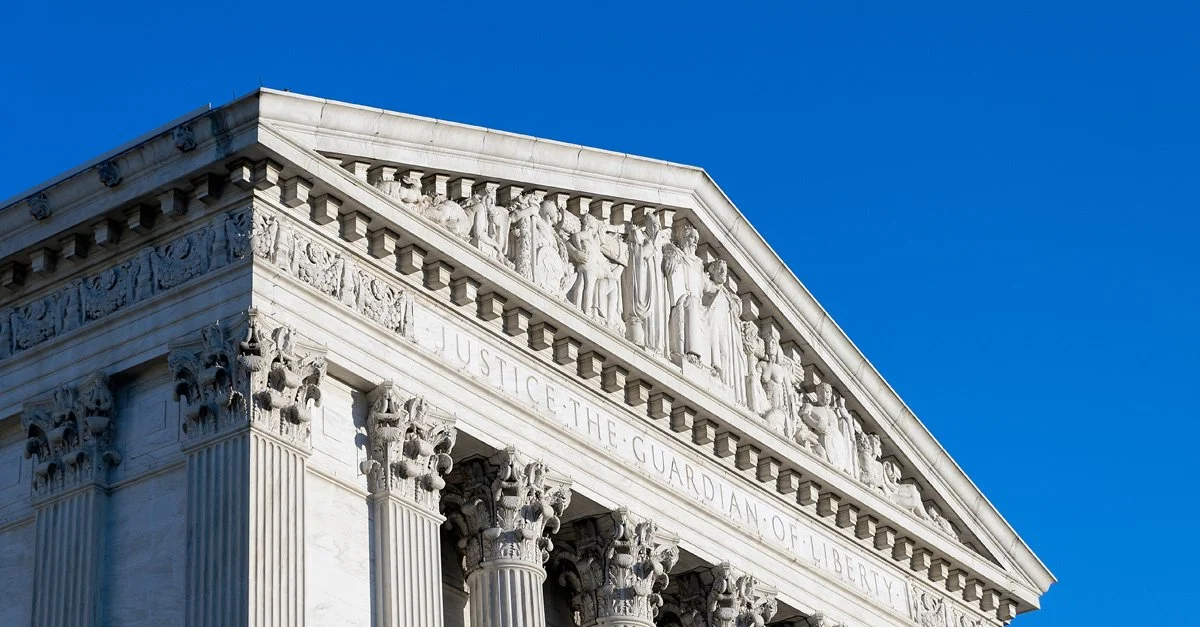
The Supreme Court on June 4 issued two opinions concerning securities-related matters. Here’s what they mean and why they are important:
Court Resolves Circuit Split on SEC Disgorgement
The Supreme Court’s opinion in Sripetch v. SEC unanimously affirmed a Ninth Circuit decision holding that the SEC, when seeking a court order requiring disgorgement from a defendant, does not have to show actual pecuniary harm to any investors that were the defendant’s victims. The Court resolved a Circuit split where the First and Ninth Circuits held that the SEC did not have to show pecuniary harm to investors, while the Second Circuit held that such a showing was required to support disgorgement.
The Court's decision is a sequel to Liu v. SEC in 2020, which held that the SEC's ability to seek equitable relief included disgorgement, but that, among other things, disgorgement must be awarded for victims and not simply paid to the government. In Sripetch, the SEC accused the defendant of running a pump and dump scheme and sought $4.1 million in disgorgement. Sripetch objected on the grounds that there was no evidence that his scheme caused any financial losses among his victims, and therefore, under Liu, no disgorgement should be permitted.
The Court, in affirming the holding of the Ninth Circuit, ruled that it did not need to address whether disgorgement was permitted under Section 21(d)(5), which permits the SEC to seek appropriate equitable relief, or Section 21(d)(7), which was enacted after Liu and expressly permits the SEC to seek disgorgement. Rather, after surveying precedent concerning restitution and equitable relief, dating as far back as 1760, the Court stated that "applying traditional equitable principles, a court ordered the defendant to disgorge the value of the gain attributable to his invasion of the plaintiff's legally protected interests without requiring a showing of pecuniary loss ... Whatever else traditional equitable principles demand, they do not require a showing of pecuniary loss before a court may issue an award of unjust profits.”
The Court rejected Sripetch’s argument that allowing the SEC to obtain disgorgement where the alleged victims did not suffer any financial loss went beyond simply restoring the status quo. Courts may choose to restore the status quo by stripping a defendant of unjust gains. Justice Gorsuch wrote the opinion with Justice Thomas concurring.
Court Upholds Structure of FCC Proceedings
In a separate decision, the Supreme Court upheld the structure of proceedings by the Federal Communications Commission in which the FCC administratively impose fines for violations of the FCC Act, but the collection of the fines could be subject to a trial in federal court. The case tested the scope of the Supreme Court's 2024 decision in SEC v. Jarkesy, which held that the SEC could not bring in-house administrative proceedings seeking penalties because the Seventh Amendment to the Constitution required a jury trial.
The decision in FCC v. AT&T resolved a Circuit split. The Fifth Circuit in the AT&T case held that the FCC's administrative forfeiture proceeding was unconstitutional, while the Second Circuit held the opposite in a case involving Verizon.
The Court, in an 8-1 decision By Chief Justice Roberts, with Justice Thomas dissenting, reversed and remanded the Fifth Circuit decision. The Court held that the FCC's enforcement structure passed constitutional muster because the initial administrative proceeding did not require payment and the factual proceedings were not conclusive. A carrier could choose to pay the fine and appeal to a Circuit Court. But the carrier could refuse to pay, in which case the FCC would have to bring a collection action in which there would be a trial de novo in federal court. That makes this situation different from Jarkesy, where the SEC's administrative proceeding created the obligation to pay. The FCC's administrative forfeiture order also has no collateral effect while the action is pending. The FCC’s forfeiture order does not determine any legal rights but is simply a prerequisite to a suit prior to the FCC bringing a collection action, and the Seventh Amendment right to a jury trial does not attach to such preliminary proceedings. The asserted reputational harm from an FCC forfeiture order does not pose a Seventh Amendment problem because any legal proceeding may result in such harm.
Interestingly, Justice Gorsuch, who waxed eloquent in Jarkesy about the right to a jury trial, did not dissent. Still undecided is how Jarkesy may affect other agencies' efforts to enforce their statutes.